 vinkodex.
EQC: high voltage battery housing corrosion and loose cell module
It does not show up on every car. Check before you buy.
critical
severity
not available
mileage
3
sources
3 sources next to the write-up.
The fault
How you spot it
The EQC is covered by two separate official recalls, both about the high voltage battery, and both naming fire risk as the consequence.
1) Battery housing corrosion (2019 build). According to the EU alert the corrosion protection of the housing may be inadequate, so the housing rusts. If moisture gets in, the insulation can fail, and the consequence is increased fire risk. The alert also names a symptom a buyer can notice straight away: after switching off, the car may fail to restart.
2) Loosely fixed cell module (2021 build). If a cell module is not tightened enough, vibration while driving can loosen the connection. The increased contact resistance heats up at that point, which is also a fire risk.
Both campaigns are free of charge, but they are only worth something if they were carried out. The housing corrosion cannot be inspected from outside either: you have to ask the franchised dealer by VIN.
One thing belongs to this but not to the campaigns: the EQC battery is actively cooled and heated by a water-glycol circuit, is made of 384 pouch cells and weighs roughly 650 kg. Active thermal management is better for degradation: the EQC is not the passively cooled e-Golf case.
Which model
Who it affects
The card opens the generation, the engine or the transmission.
Generations and models
2 generations.
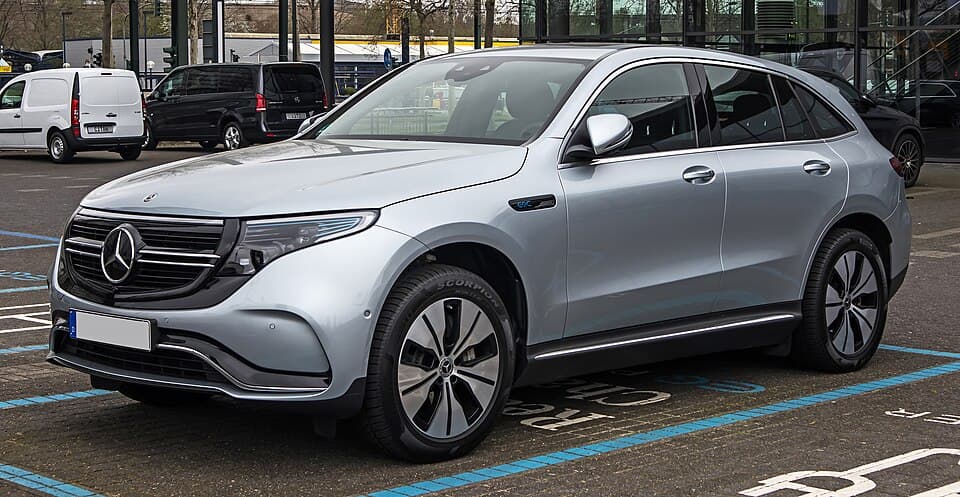
Mercedes-Benz
N293
EQC
© M 93 / CC BY-SA 3.0 de
Mercedes-Benz EQC N293
2019–2019
Mercedes-Benz
N293
EQC
© M 93 / CC BY-SA 3.0 de
Mercedes-Benz EQC N293
2021–2021
vinkodex.Checklist
EQC: high voltage battery housing corrosion and loose cell module
What you would check for this fault. Take it to the car.
Before you buy
Checklist
What you tick stays on this device only.
Sources
How we know

Information, not an expert opinion
We write the descriptions, and we put the source next to them. A person reviews them before they go out. They are still information, not a technical expert opinion.
- A fault on the list does not mean the car you are looking at has it.
- A fault missing from the list does not mean the model is fault-free. Write-ups are made model by model. Not all of them are done.
- You decide whether to buy. This is no substitute for an inspection. That needs a workshop and a history check.